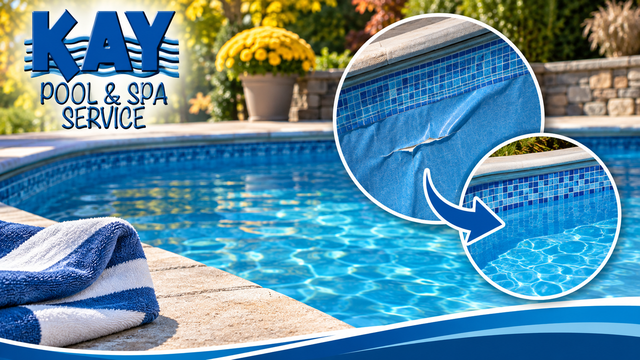
A pool liner does more than make your pool look finished.
It helps hold the water in, protects the pool structure underneath, and plays a big part in how clean and inviting the pool looks. Over time, though, liners can stretch, fade, wrinkle, tear, or start pulling away from the edges.
Some problems can be repaired. Others may be telling you it’s time for a replacement.
Knowing what to look for can help you catch issues early and avoid bigger problems later.
Small Tears Don’t Always Mean a New Liner
One of the most common liner issues is a small tear or puncture.
These can happen from pool tools, toys, sharp objects, pets, or simply from normal wear over time. A small tear may be repairable depending on where it is, how large it is, and the overall condition of the liner.
The important thing is not to ignore it.
Even a small opening can slowly leak water and create additional stress on the liner. The sooner it’s looked at, the better the chance that a simple repair may solve the problem.
Watch for Wrinkles and Stretching
Wrinkles can show up for several reasons.
Sometimes they develop as a liner ages and loses flexibility. In other cases, water may get behind the liner or the liner may shift.
A few small wrinkles may not seem like a big deal, but they can make the pool harder to clean and may eventually lead to more wear in those areas.
Stretching is another sign to watch. When the liner starts pulling away from corners, steps, or the top edge, it may be reaching the end of its useful life.
Fading Is More Than a Cosmetic Issue
Pool liners naturally fade over time from sunlight, pool chemicals, and regular use.
A little fading is normal.
When the liner becomes very brittle, heavily faded, or starts showing thin spots, the material may no longer have the flexibility it once did. That can make tears and leaks more likely.
Sometimes the pool still looks fine from a distance, but the liner itself has become much more fragile.
Leaks Can Be Tricky
Not every drop in water level means the liner is leaking.
Hot weather, evaporation, splashing, plumbing problems, and equipment issues can all cause water loss.
That’s why it’s helpful to have the problem checked before assuming the liner is the cause.
When a liner leak is found early, it may be possible to repair the damaged area. When there are multiple leaks or the material is already aging, replacement may make more sense.
Repair or Replace?
The decision usually comes down to the age and overall condition of the liner.
A relatively new liner with one small damaged area may be a good candidate for repair.
An older liner with fading, cracking, stretching, several patches, or repeated leaks may be better replaced rather than repaired again.
A professional can help you look at the full condition of the liner instead of focusing on just one problem.
Not Sure What Your Pool Liner Needs?
Sometimes it’s hard to tell whether a liner can be repaired or whether replacement makes more sense.
Kay Pool & Spa Service offers a Pool Liner Assessment to help you take a closer look at the condition of your liner and determine what your next step may be.
Take the Pool Liner Assessment: https://kaypoolandspa.com/pool-liners/
Thinking About Your Pool Liner?
The off-season can be a good time to look at repairs and plan ahead before next pool season.
Kay Pool & Spa Service can help identify liner problems, discuss repair options, and help you determine when replacement may be the better choice.
Should you notice tears, wrinkles, fading, leaks, or other changes in your liner, don’t wait until opening day to deal with them.
A little attention now can help make next pool season a lot easier.