
When summer temperatures climb into the 90s, there’s nothing quite like stepping into a cool, refreshing pool. Here in Southeastern Pennsylvania, we’ve certainly had our share of hot, humid days this season. While the heat makes swimming even more enjoyable, it also puts extra stress on your pool.
Many pool owners notice they’re adding more chemicals, topping off the water more often, or running their equipment longer than usual. That’s because extreme heat changes the way your pool performs. Understanding what happens during a heat wave can help you stay ahead of problems and spend more time enjoying your backyard instead of fixing it.
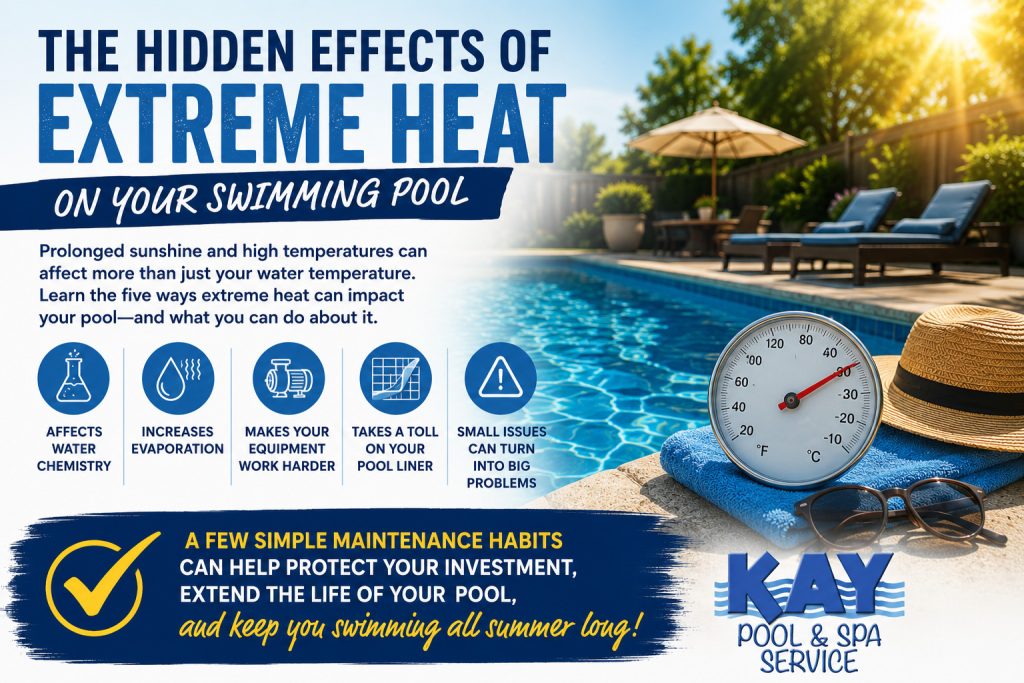
5 Ways Extreme Heat Impacts Your Swimming Pool
1. Your Water Chemistry Changes More Quickly
One of the biggest challenges during hot weather is keeping your pool water balanced. Intense sunlight causes chlorine to break down faster, while warmer water creates an environment where bacteria can multiply more easily.
During a heat wave, it’s a good idea to test your water more often than you normally would. Catching small changes early helps keep your water crystal clear and prevents larger problems from developing. Keeping your pH and sanitizer levels within the recommended range also helps your chemicals work more effectively, saving both time and money.
2. Evaporation Can Leave Your Pool Short on Water
A little water loss is completely normal throughout the summer, but several days of high temperatures can accelerate evaporation. Add a steady breeze and plenty of cannonballs, and your water level may drop sooner than expected.
Take a quick look at your pool every few days to make sure the water stays at the proper level. Water that falls below the skimmer opening can reduce circulation and place unnecessary strain on your pump. Should you find yourself adding water frequently, it’s also worth checking to make sure you’re not dealing with a small leak.
3. Warm Water Gives Algae a Better Chance to Grow
Algae thrive in warm water, especially when sanitizer levels begin to fall. A pool that looked perfect at the beginning of the week can quickly become cloudy or develop green spots after several extremely hot days.
Regular brushing, vacuuming, and good water circulation remain the best defense. Running your filtration system a little longer during periods of excessive heat can also help keep the water moving and improve the effectiveness of your sanitizer.
Staying consistent with routine maintenance is much easier than trying to recover a pool after algae has taken hold.
4. Your Pool Equipment Is Working Overtime
Your pump and filter don’t get a summer vacation. In fact, they’re often working harder than ever.
More swimmers mean more sunscreen, body oils, grass clippings, insects, and other debris entering the water. Your filtration system has to remove all of it while continuing to circulate and clean the pool.
Spend a few minutes each week checking your skimmer basket, pump basket, and filter. Listen for unusual sounds and pay attention to reduced water flow. Small maintenance tasks today can often prevent unexpected repairs during the busiest part of the swimming season.
5. Don’t Forget About Your Pool Liner
While most people focus on the water, your pool liner deserves attention, too. It quietly protects your pool every single day, yet it’s one of the most overlooked parts of routine maintenance.
Extended exposure to intense sunlight, warm water, and fluctuating chemical levels can gradually affect vinyl liners. Over time, you may begin to notice fading colors, wrinkles, loose seams, brittle areas, or small tears. These changes often develop slowly, making them easy to overlook until they become much larger concerns.
Should you notice anything that doesn’t look quite right, the team at Kay Pool & Spa is always happy to take a closer look. Whether your liner needs a simple repair or it’s time to start thinking about replacement, we’ll help you understand your options so you can make the best decision for your pool.
Enjoy the Rest of Summer with Confidence
Extreme heat is simply part of summer in Southeastern Pennsylvania, but it doesn’t have to create unnecessary headaches for pool owners. A little extra attention during hot weather can help protect your water, equipment, and pool liner while keeping your pool clean, safe, and ready for family and friends.
At Kay Pool & Spa, we’ve been helping homeowners enjoy their pools for years. Whether you own an aboveground or inground pool, we’re here to answer your questions, recommend the right products, and help you keep everything in top condition throughout the season.
Frequently Asked Questions
How often should I test my pool water during a heat wave?
During extended periods of hot weather, it’s a good idea to test your pool water at least two to three times a week. Heavy pool use or frequent rainstorms may require even more frequent testing.
Does hot weather make chlorine disappear faster?
Yes. Strong UV rays from the sun break down chlorine more quickly, which is why maintaining proper sanitizer levels becomes more important during the hottest weeks of summer.
Is it normal for my pool to lose water in hot weather?
Yes, evaporation increases during periods of high temperatures, sunshine, and wind. However, excessive water loss may indicate a leak that should be investigated.
Can extreme heat damage a pool liner?
Over time, prolonged exposure to sunlight, heat, and changing chemical levels can contribute to fading, brittleness, wrinkles, and seam separation. Regular inspections can help identify problems before they become more serious.
When should I have my pool liner inspected?
Any time you notice fading, wrinkles, loose seams, small tears, or unexplained water loss, it’s worth having your liner evaluated. Addressing small issues early can often help avoid larger repairs later.