Quick Answer
Regular pool maintenance helps prevent algae growth, equipment failures, water chemistry problems, and costly repairs. Most pool issues develop gradually, which means routine professional service can catch problems early and keep your pool clean, safe, and swim-ready throughout the season.
Owning a pool should be about enjoying summer afternoons, hosting family gatherings, and creating memories with the people you care about. It shouldn’t be about spending weekends trying to solve cloudy water, fighting algae, or wondering why the pump suddenly stopped working.
At Kay Pool & Spa, we regularly hear from homeowners throughout Leesport, Allentown, Temple, Hamburg, Wyomissing, Mohnton, Pottstown, and surrounding communities who call us after noticing something isn’t quite right with their pool.
The interesting thing is that most pool problems don’t happen overnight.
In fact, many issues begin weeks before homeowners notice the first sign of trouble.
That’s one of the biggest reasons routine pool maintenance matters.
Why Do Pool Problems Seem to Appear Suddenly?
Most homeowners assume a pool is fine as long as the water looks clear.
Unfortunately, that’s not always true.
Water chemistry can slowly drift out of balance. Equipment can begin wearing down. Filters can become less effective. Small algae colonies can start developing long before they become visible.
Everything may appear normal on the surface until one day the water turns cloudy, algae appears, or equipment stops functioning properly.
By then, correcting the problem often costs significantly more than routine maintenance would have.
What Does Professional Pool Maintenance Actually Include?
Professional pool maintenance is much more than adding chemicals.
A thorough maintenance visit helps ensure every major component of your pool is operating properly.
Routine service typically includes:
- Testing and balancing water chemistry
- Checking chlorine levels
- Monitoring pH and alkalinity
- Inspecting pumps and filters
- Cleaning skimmer baskets
- Evaluating circulation performance
- Looking for early signs of equipment wear
- Identifying potential repair concerns
These routine inspections help catch small issues before they become major repairs.
How Does Proper Water Balance Protect Your Pool?
Water chemistry is one of the most important aspects of pool ownership.
When chemical levels remain balanced, swimmers enjoy cleaner, healthier water and pool equipment operates more efficiently.
When water chemistry becomes unbalanced, several problems can occur:
- Cloudy water
- Algae growth
- Scale buildup
- Surface staining
- Equipment damage
- Skin and eye irritation
Pennsylvania’s summer weather can create rapid changes in water conditions, especially during periods of intense heat, heavy rain, or frequent pool use.
Regular testing helps prevent those fluctuations from creating bigger problems.
Can Regular Maintenance Extend Equipment Life?
Absolutely.
Your pool equipment represents a significant investment.
Pumps, filters, heaters, automation systems, and circulation equipment all work together to keep your pool functioning properly.
During maintenance visits, technicians can often spot early warning signs such as:
- Reduced circulation
- Unusual noises
- Pressure changes
- Minor leaks
- Wear on moving parts
Addressing these issues early is often far less expensive than replacing major equipment after a failure occurs.
Why Is Algae Prevention Easier Than Algae Removal?
One of the most common calls we receive during the summer involves algae.
Many homeowners are surprised to learn that algae often begins developing long before it becomes visible.
Once algae takes hold, treatment becomes more complicated.
The pool may require:
- Additional chemicals
- Multiple cleanings
- Water balancing adjustments
- Extra filtration cycles
Routine maintenance dramatically reduces the risk of algae outbreaks by keeping water chemistry balanced and circulation functioning properly.
Is Weekly or Biweekly Service Better?
The answer depends on your pool, your schedule, and how much involvement you want in maintenance.
Many homeowners choose weekly service because it provides the most consistent care throughout the swimming season.
Others prefer biweekly service combined with their own basic monitoring between visits.
Both options provide valuable oversight and can help prevent costly problems from developing.
At Kay Pool & Spa, we help homeowners choose the maintenance schedule that best fits their needs and budget.
A Real-World Situation We See Every Summer
A homeowner notices the water isn’t quite as clear as usual.
A few days later, algae appears near the steps.
By the following weekend, the pool requires shock treatment, additional chemicals, and extra cleaning.
In many cases, routine maintenance would have identified the underlying issue before it became visible.
That’s why so many pool owners find that preventative maintenance is actually the more affordable option.
What Are the Biggest Benefits of Professional Pool Maintenance?
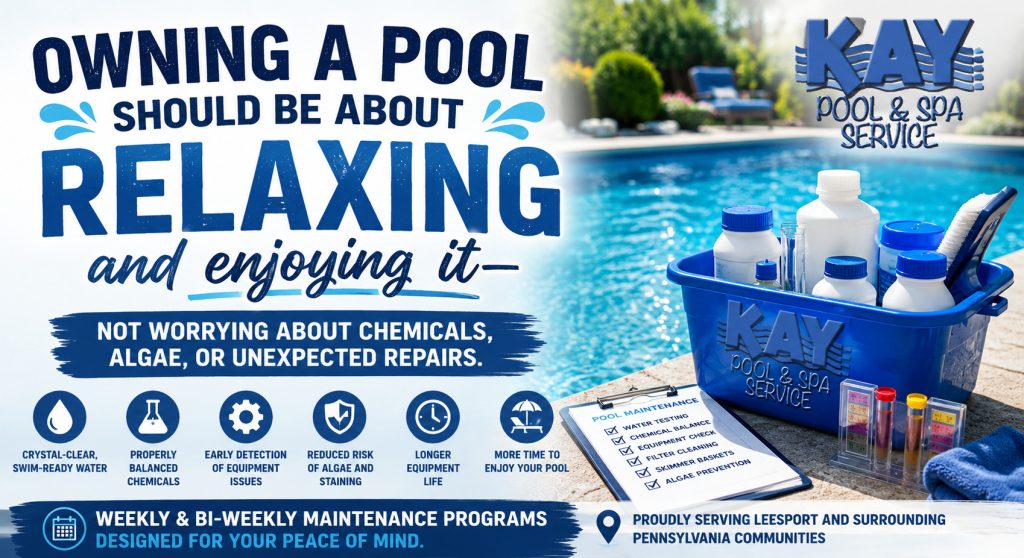
When you invest in routine maintenance, you gain:
Crystal-Clear Water
Consistent water testing helps maintain swim-ready conditions.
Properly Balanced Chemicals
Balanced water improves swimmer comfort and protects pool surfaces.
Early Detection of Equipment Issues
Small problems can often be addressed before major repairs become necessary.
Reduced Risk of Algae and Staining
Preventative care helps avoid common seasonal issues.
Longer Equipment Life
Well-maintained systems typically last longer and perform more efficiently.
More Time to Enjoy Your Pool
Perhaps the biggest benefit is spending less time troubleshooting and more time swimming.
Serving Pool Owners Throughout Southeastern Pennsylvania
Our team proudly serves homeowners throughout:
- Leesport
- Allentown
- Hershey
- Hamburg
- Fogelsville
- Muhlenberg
- Wyomissing
- Temple
- Mohnton
- Shillington
We understand the challenges local pool owners face and tailor maintenance programs to Pennsylvania’s seasonal conditions.
Simple Pool Maintenance Checklist
Use this quick checklist throughout the season:
✓ Test water regularly
✓ Monitor chlorine levels
✓ Maintain proper pH balance
✓ Empty skimmer baskets
✓ Check equipment performance
✓ Clean filters as recommended
✓ Watch for signs of algae
✓ Schedule routine professional service
Ready for a Cleaner, Healthier Pool?
A swimming pool is a significant investment.
Regular maintenance helps protect that investment while reducing stress, preventing costly repairs, and keeping your pool ready whenever you want to enjoy it.
Should you want to learn more about our weekly and biweekly pool maintenance programs, we’re here to help.
Frequently Asked Questions
How often should a pool be professionally serviced?
Most homeowners benefit from weekly or biweekly service during swimming season.
Is professional pool maintenance worth the cost?
In many cases, preventative maintenance costs less than correcting algae outbreaks, equipment failures, or water chemistry issues.
Why does my pool water turn cloudy?
Cloudy water can result from poor filtration, improper chemical balance, algae growth, or circulation issues.
Can maintenance help extend equipment life?
Yes. Routine inspections help identify problems early and keep equipment operating efficiently.
What causes algae to grow in a pool?
Algae often develops when water chemistry becomes unbalanced or circulation is inadequate.
Do I still need service if my pool looks clean?
Yes. Many problems begin before visible signs appear.